Key points from article :
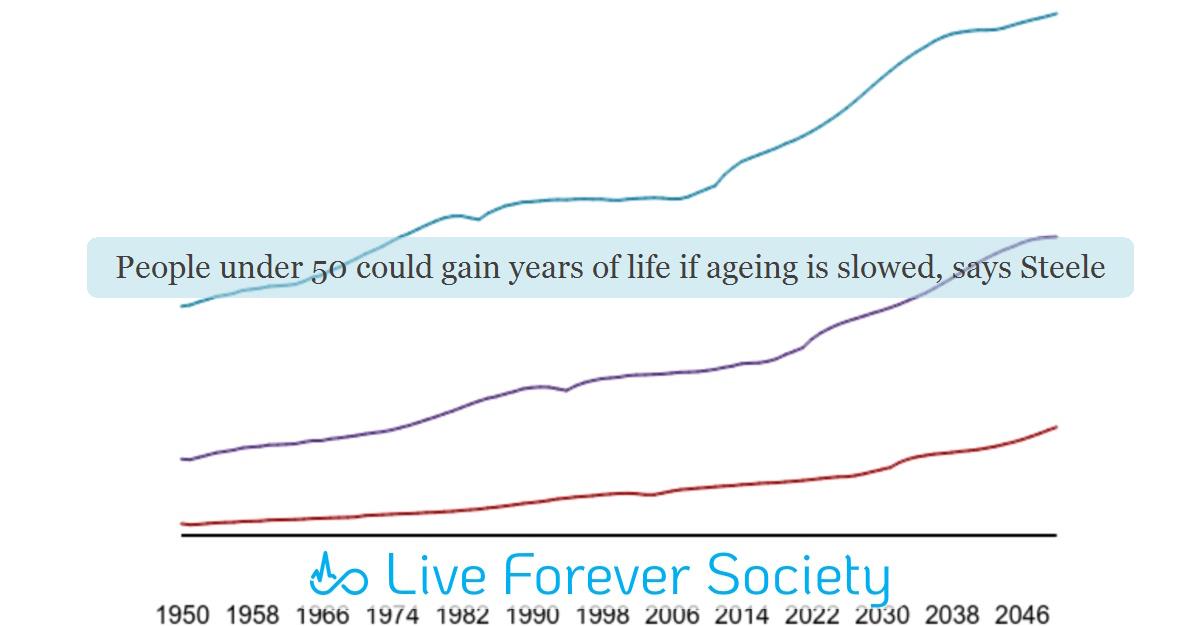
People under 50 are unlikely to live forever, but they may live long enough to benefit from medical advances that substantially extend healthy lifespan, according to scientist and author Andrew Steele. Writing in BBC Science Focus, Steele, a former Research Fellow at the Francis Crick Institute and author of Ageless, argues that slowing ageing itself is the most efficient route to longer, healthier lives.
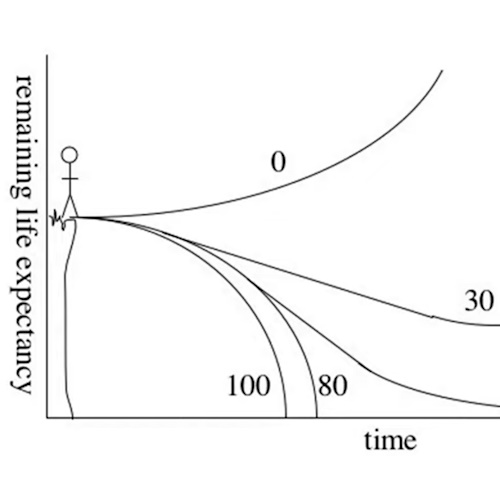
Steele points out that the average person in the world is about 30 years old, and that global life expectancy was 73.2 years in 2023, so the typical person has more than 40 years ahead of them. In rich countries, the average age is about 40 and life expectancy is just over 80. Medical progress already adds roughly a couple of months to life expectancy every year. Longevity escape velocity, the theoretical point at which life expectancy rises by more than a year for every year that passes, would mean that death keeps receding into the future. Steele calls the name slightly ridiculous, but says the underlying idea is familiar.
He highlights several recent breakthroughs, including a gene-editing treatment from Verve and Eli Lilly that switched off the PCSK9 gene to lower cholesterol, a personalised gene therapy for a baby with a rare liver condition, Vertex's stem cell-derived insulin-producing cells that freed 10 of 12 people with type 1 diabetes from insulin injections, lab-grown brain cells for Parkinson's in late-stage trials, and a personalised mRNA cancer vaccine from Merck and Moderna for melanoma. Steele also cites predictions by Anthropic CEO Dario Amodei and Isomorphic Labs founder Demis Hassabis that AI could greatly accelerate biology and medicine.
However, Steele argues that curing individual diseases adds surprisingly little to life expectancy, because people go on to die of something else. A complete cure for cancer would add about 2.8 years, whereas slowing ageing by just 5% could in theory add about three years by protecting against many diseases at once. Following health advice could add up to a decade, eliminating smoking a year or more, and reducing air pollution 1.9 years globally. Drugs such as metformin, rapamycin and possibly GLP-1 weight loss medicines may slow ageing in animals, and Steele calls for funding for human trials. He thinks a gene therapy for longevity is unlikely within five years but probable within 20, and is optimistic that his daughter's generation will live well into the 22nd century.
The article is an opinion piece, and its forecasts are speculative. Steele himself notes that gains in life expectancy at the cutting edge may be slowing, that some research suggests a fundamental limit to human lifespan of around 150 years, and that the predictions of AI leaders about curing disease within a decade or so remain unproven.
The article was written by Andrew Steele and published in BBC Science Focus.