Key points from article :
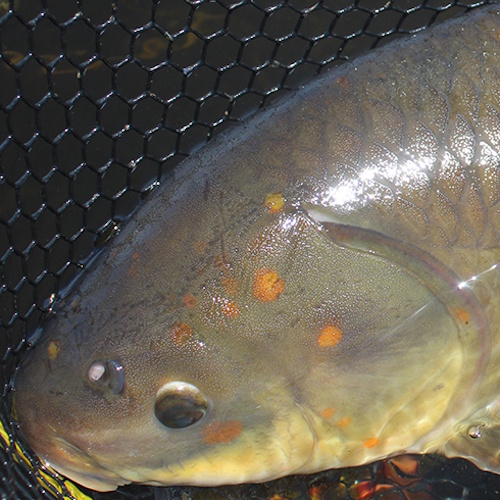
A freshwater fish found in Montana's Upper Missouri River can live for up to 130 years, more than three times longer than scientists had thought. The study found that some blue suckers alive today hatched in the late 1800s, making the species one of the longest-lived vertebrates in North America.
The blue sucker (Cycleptus elongatus) is native to 23 US states, but until now little was known about its life history, and its lifespan had been estimated at around 40 years. Researchers from the University of Minnesota Duluth, Montana Fish, Wildlife & Parks and the University of Hawai'i at Mānoa collected and analysed about 50 fish from one population in Montana between 2023 and 2026.
To work out the age of each fish, the team studied otoliths, tiny stone-like structures in the inner ear that add a new layer each year, much like tree rings. Blue sucker otoliths are extremely small, but the researchers were able to cut thin sections and count the annual bands. To confirm the ages, they used bomb radiocarbon dating. Nuclear weapons tests in the 1950s and 1960s roughly doubled the amount of radioactive carbon in the atmosphere, and this spike is recorded in the tissues of animals alive at the time, providing a reliable time marker.
The results showed that more than 60% of the fish were over 90 years old, and the oldest were around 130. Fisheries biologist Luke Holmquist said the oldest fish hatched around two years after Montana became a state in 1889. The blue sucker is the fourth member of the sucker family found to live beyond 100 years since 2019, joining the bigmouth buffalo, smallmouth buffalo and black buffalo. The researchers say such a long lifespan is surprising for a fish that lives year-round in fast-flowing rivers, which demand a lot of energy and were assumed to favour shorter lives.
The biological mechanisms behind the fish's exceptional longevity are not yet known. The study also raises conservation concerns. Surveys over the past three decades have found almost no young fish joining the population, and most of the fish caught were born before major dams were completed on the Missouri River in the mid-1900s. The authors suggest that dams may be preventing successful breeding, although the study does not establish the cause. The species is considered imperilled in 22 of the 23 states where it lives. The findings come from a single population of around 50 fish, so lifespans elsewhere may differ.
The research was led by Alec Lackmann at the University of Minnesota Duluth, Luke Holmquist at Montana Fish, Wildlife & Parks and Allen Andrews at the University of Hawai'i at Mānoa and published in Communications Biology.