Key points from article :
A small, first-in-human trial has tested injecting patients' own stem cells directly into the brain as a treatment for Alzheimer's disease. Early results from five people suggest the approach is safe, and four of the five showed improvements in cognition, according to Regeneration Biomedical (RBI), the US company running the trial.
Most recently approved Alzheimer's drugs are antibodies that clear amyloid-beta, a protein that builds up in clumps in the brains of people with the disease. These treatments slow decline only modestly and carry risks such as brain swelling and bleeding. RBI's founder and president, neurosurgeon Christopher Duma, argues that a different approach is needed, saying the aim is to repair what is going wrong in the brain rather than only removing debris.
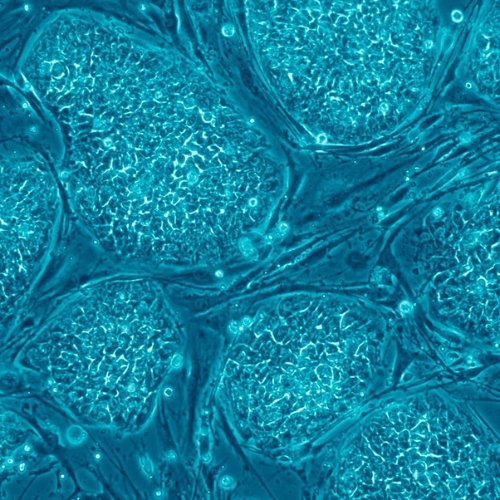
The therapy, called RB-ADSC, uses stem cells taken from each patient's own abdominal fat by liposuction. The cells are grown in the lab and selected for high activity of Wnt, a signalling pathway involved in brain development and repair. Patients then have a small reservoir surgically implanted under the scalp, which delivers the cells into the fluid-filled spaces of the brain called the ventricles, bypassing the blood-brain barrier.
In the Phase 1 trial, the first five participants with mild to moderate Alzheimer's received a single dose of either two million or five million cells. No serious side effects were reported, including headaches or nausea from the injection. Four of the five volunteers showed cognitive improvements, and Duma said the trial showed favourable safety and statistically significant changes in biomarkers over 52 weeks. The US Food and Drug Administration has granted the therapy fast track designation, and a Phase 2 trial comparing it with a placebo in around 115 participants could begin as early as December. That trial will look in more detail at brain function, memory and thinking, and effects on amyloid-beta and tau.
The results should be treated with caution. Phase 1 trials are designed mainly to test safety, the trial involved only five people with no control group, and both the patients and the researchers knew who was being treated. The findings have so far been shared only as a brief conference abstract and in company statements, without detailed data on the size of the cognitive or biomarker changes. The treatment also requires liposuction and brain surgery, and confirmed results are likely to be several years away.
The research was led by Christopher Duma at Regeneration Biomedical and published as an abstract in Alzheimer's & Dementia.